Topic


デジタル建築教育システムの構築に関して2
先述のデジタル建築教育システムの構築において、私たちは製図室の家具のあり方についても議論しました。そして、デジタル技術が進展する今日だからこそ、学生が直接触れる家具は、その素材や由来、作り方にこだわり、そこに学びの機会を設定することを意図しました。
そこで、2年生の製図室は手書き図面向けの製図台を維持し、3年生および大学院生製図室と芸術制作室はパソコン作業を前提とした木製としました。机は、県内の家具職人による特注品とし、材料は広島県産材や県内企業が保有する国産材のアップサイクル素材が採用されています。そして木材の流通(森林)から製品利用に至るまでの一連の流れを、体験的に学ぶ機会も設けました。
そのうち一つの機会については、2026年2月5日に本HPのNEWSに掲載しています。
https://huag.hiroshima-u.ac.jp/news/1540/
While developing the digital architectural education system mentioned earlier, we also discussed the design of the furniture in the drafting rooms. We decided that, precisely because digital technology is advancing today, the furniture that students interact with directly should be carefully selected based on its materials, origin, and how it is made, with the intention of creating educational opportunities through these elements.
Consequently, the second-year drafting room retains drafting tables designed for hand-drawn plans, while the third-year and graduate student drafting rooms, as well as the art studio, are equipped with wooden desks designed for computer work. The desks were custom-made by local furniture craftsmen, and the materials selected included timber sourced from Hiroshima Prefecture as well as upcycled domestic timber from companies within the prefecture. We also created educational opportunities for students to experientially learn about the entire process, from the distribution of timber (forests) to its use in finished products.
Details about one of these opportunities were posted in the NEWS section of this website on February 5, 2026.

サクラとヒノキを主に、ナラ、ホウノキ、イチョウも使われています。
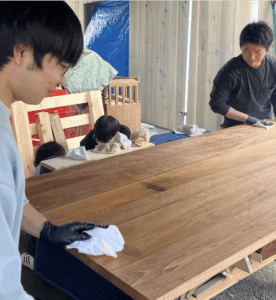
希望する学生が家具製作の体験を致しました。